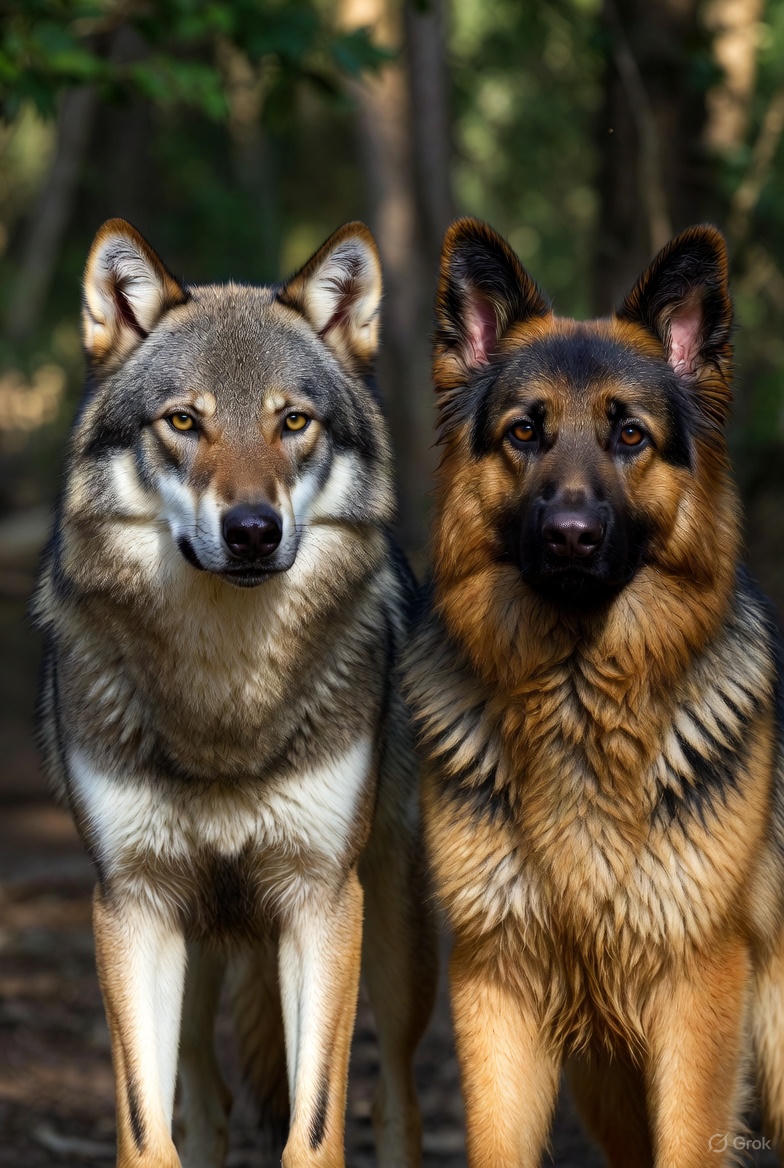
The relationship between German Shepherds and wolves has fascinated dog enthusiasts, scientists, and animal lovers for generations. While these two canines may seem worlds apart in their daily lives—one lounging on your couch, the other roaming wild territories—they share a profound evolutionary connection that shapes everything from their physical characteristics to their behavioral patterns. This comprehensive guide explores the intricate relationship between German Shepherds and wolves, examining their shared ancestry, physical similarities, behavioral traits, and what modern science tells us about these remarkable animals.
The Evolutionary Connection: From Wolf to German Shepherd
According to research documented by Wikipedia, all domestic dogs, including German Shepherds, descended from wolves thousands of years ago. This domestication process, which began approximately 15,000 to 40,000 years ago, represents one of humanity’s most significant achievements in animal husbandry. The German Shepherd breed itself is relatively modern, having been formally developed in Germany during the late 1800s by Captain Max von Stephanitz, who sought to create the perfect working dog.
What makes the German Shepherd particularly interesting in discussions about wolves is that this breed was deliberately developed to retain many wolf-like characteristics while being entirely suitable for domestic life. Von Stephanitz’s vision was to preserve the working abilities, intelligence, and physical prowess reminiscent of the wolf while creating a dog that could serve as both a protector and companion.
The genetic studies published by various scientific institutions have confirmed that German Shepherds, despite thousands of years of selective breeding, still share approximately 99.9% of their DNA with wolves. This remarkable genetic similarity explains why German Shepherds often display behaviors and physical traits that seem distinctly wolf-like, even though they are thoroughly domesticated animals.
Physical Similarities: The Wolf-Like Appearance
One of the most striking aspects of German Shepherds is their wolf-like appearance, which has made them popular in movies and television shows when filmmakers need a “tame wolf” for productions. The physical similarities between German Shepherds and wolves are numerous and significant.
Body Structure and Build
German Shepherds possess a robust, muscular build that mirrors the athletic frame of wolves. Both animals feature a strong, elongated body designed for endurance and speed. Their chest is deep and well-developed, providing ample room for the heart and lungs—a crucial adaptation for sustained physical activity. The sloping back characteristic of many German Shepherd lines, while more pronounced in show lines, reflects the efficient gait pattern also seen in wolves traversing long distances.
Adult male German Shepherds typically weigh between 65-90 pounds and stand 24-26 inches at the shoulder. While wolves are generally larger—with adult males weighing 70-145 pounds depending on subspecies—the size overlap means that a large German Shepherd can approach the dimensions of a smaller wolf. This size similarity, combined with their powerful build, contributes to the German Shepherd’s imposing presence.
Facial Features and Expression
The facial structure of German Shepherds bears remarkable resemblance to wolves. Both possess erect, triangular ears that provide excellent sound detection—a trait essential for survival in the wild and valued in working dogs. Their almond-shaped eyes convey intelligence and alertness, though German Shepherds typically have brown eyes while wolves often have amber or yellow eyes.
The muzzle length and shape are particularly wolf-like in German Shepherds. Both animals have long, strong jaws capable of delivering powerful bites—wolves for bringing down prey, German Shepherds for protection work. According to Forbes and other publications covering animal behavior, the bite force of a German Shepherd (around 238 PSI) is substantial, though not quite matching a wolf’s bite force (approximately 400 PSI).
Coat and Coloration
The double coat of German Shepherds serves the same purpose as a wolf’s fur—protection from harsh weather and environmental hazards. Both animals shed their undercoat seasonally, a trait known as “blowing coat.” The most common German Shepherd colorations—black and tan, sable, and solid black—find parallels in wolf coat variations, particularly in the gray wolf subspecies that were most likely the ancestors of domestic dogs.
Behavioral Connections: The Wolf Within
While German Shepherds are domesticated animals with thousands of years of selective breeding behind them, they retain certain behavioral characteristics rooted in their wolf ancestry. Understanding these behaviors helps owners provide better care and training for their German Shepherds.
Pack Mentality and Social Structure
Wolves are famous for their complex pack hierarchy and social structures, and German Shepherds retain strong pack-oriented instincts. This manifests in several ways in domestic settings. German Shepherds typically bond intensely with their human family, viewing them as their pack. They naturally look for leadership and structure, which explains why this breed responds exceptionally well to consistent, firm training.
Research published by animal behaviorists and cited by institutions like National Geographic demonstrates that German Shepherds, like wolves, are happiest when they understand their position in the family hierarchy. They may become anxious or develop behavioral problems when leadership is unclear or inconsistent. This isn’t dominance in the outdated “alpha dog” sense, but rather a need for predictable social structure and clear communication—the same need that governs wolf pack dynamics.
Territorial Instincts
Both wolves and German Shepherds exhibit strong territorial behaviors. Wolves mark and defend territories spanning dozens or even hundreds of square miles. German Shepherds, while domesticated, retain scaled-down versions of these instincts. They naturally patrol their property, alert their family to strangers or unusual occurrences, and may display protective behaviors when they perceive threats to their territory or pack members.
This territorial nature makes German Shepherds excellent guard dogs and has cemented their reputation in police and military work worldwide. However, it also means owners must socialize their German Shepherds properly to ensure these instincts don’t become problematic in modern domestic settings.
Communication Methods
Wolves communicate through a sophisticated combination of vocalizations, body language, and scent marking. German Shepherds have retained many of these communication methods, though modified by domestication. Both species use barking, though wolves bark less frequently than domestic dogs. German Shepherds are notably vocal, using various sounds—barks, whines, growls, and even “talking”—to communicate with their human families.
Body language remains remarkably similar between the two species. The play bow, tail position indicating mood, ear positioning, and facial expressions all closely mirror wolf communication. Owners who learn to read their German Shepherd’s body language often report that their dogs seem almost human in their ability to communicate complex emotional states.
Prey Drive and Hunting Instincts
Wolves are apex predators with finely tuned hunting instincts, and traces of these instincts appear in German Shepherds, though typically expressed in less intense forms. Many German Shepherds exhibit strong prey drive, showing intense interest in small animals, enjoying chase games, and demonstrating the focused stalking behavior seen in hunting wolves.
These instincts have been channeled productively in German Shepherds through various working roles. Search and rescue dogs use modified hunting behaviors to track and locate missing persons. Police dogs employ these instincts when pursuing suspects. Understanding this connection to wolf hunting behavior helps trainers and owners work with, rather than against, the dog’s natural inclinations.
Wolf-Dog Hybrids: A Controversial Topic
The discussion of German Shepherds and wolves inevitably leads to questions about wolf-dog hybrids—animals that are part wolf and part domestic dog. This is a complex and controversial subject that deserves careful consideration.
The Reality of Wolf-Dog Hybrids
Wolf-dog hybrids do exist, created by breeding wolves with domestic dogs, sometimes including German Shepherds. These animals inherit traits from both parents, resulting in unpredictable temperaments that often make them unsuitable as pets. According to wildlife experts and organizations cited by sources like Scientific American, wolf-dog hybrids typically possess the fear of humans characteristic of wolves combined with the lessened fear typical of domestic dogs—a potentially dangerous combination.
Most states have restrictions or outright bans on owning wolf-dog hybrids, and for good reason. These animals require specialized care, enormous spaces to roam, and experienced handlers who understand both wolf and dog behavior. They rarely make good pets and often end up in sanctuaries or euthanized when owners realize they cannot manage them.
Misrepresenting German Shepherds as “Part Wolf”
Some breeders or sellers unethically market German Shepherds as having “recent wolf blood” or being “part wolf” to command higher prices or seem more exotic. This is almost always false advertising. Pure German Shepherds are domestic dogs, period. While they share ancestry with wolves going back thousands of years, they are not wolf hybrids and do not have recent wolf lineage.
Reputable breed organizations and kennel clubs have strict standards for German Shepherds, and any actual wolf content would disqualify an animal from registration. Buyers should be skeptical of any breeder claiming their German Shepherds are part wolf, as this is either a misunderstanding of canine ancestry or deliberate deception.
Living With German Shepherds: Honoring Their Heritage
Understanding the wolf connection helps owners provide better care for their German Shepherds. While these dogs are fully domesticated and adapted to human companionship, respecting their heritage means acknowledging certain needs and tendencies.
Exercise and Mental Stimulation
Like wolves that may travel 30 miles in a day, German Shepherds require substantial exercise. A bored German Shepherd, like a captive wolf, may develop destructive behaviors or anxiety. Daily vigorous exercise—running, hiking, swimming, or engaging in dog sports—helps satisfy the high energy levels inherited from their wild ancestors.
Mental stimulation is equally important. Wolves spend their days solving problems, tracking prey, and navigating complex social relationships. German Shepherds need mental challenges through training, puzzle toys, scent work, or learning new commands. Many German Shepherd owners find that their dogs are never truly “tired” unless they’ve exercised both body and mind.
Proper Socialization and Training
Wolves learn appropriate behavior through interactions with pack members from puppyhood. German Shepherds similarly require early, extensive socialization to develop into well-adjusted adults. Exposing puppies to various people, animals, environments, and situations during their critical developmental period (roughly 3-14 weeks) helps prevent fear-based behaviors later in life.
Training should be consistent, positive, and firm. German Shepherds respect leadership and clear boundaries—traits that served wolf packs well and remain important for these intelligent dogs. Harsh training methods are counterproductive and can damage the trust that should exist between dog and owner.
Creating Appropriate Living Spaces
While German Shepherds don’t need the hundreds of square miles a wolf pack requires, they do need adequate space to move and patrol. These dogs generally do best in homes with yards where they can exercise and survey their territory. For those living in apartments or smaller spaces, extra commitment to daily exercise and mental stimulation becomes crucial.
Understanding where and how to create comfortable living arrangements for pets, including German Shepherds, is essential for their wellbeing. Pet habitat considerations play a vital role in ensuring these active, intelligent dogs thrive in domestic environments.
The German Shepherd in Working Roles: Wolf Traits in Action
The characteristics German Shepherds inherited from wolves make them exceptional working dogs. Their intelligence, loyalty, physical capabilities, and problem-solving abilities have made them the breed of choice for numerous demanding roles.
Police and Military Work
German Shepherds have served in military and police capacities for over a century. Their wolf-derived traits—keen senses, territorial instincts, protective nature, and trainability—make them ideal for protection work, patrol duties, and apprehension. The same focus and determination a wolf uses when hunting prey translates into the German Shepherd’s ability to pursue and apprehend suspects.
According to reports in publications like The New York Times covering police dog programs, German Shepherds consistently rank among the top breeds for police work, competing primarily with Belgian Malinois. Their combination of power, intelligence, and versatility makes them invaluable partners in law enforcement.
Search and Rescue Operations
The scenting abilities German Shepherds inherited from wolves make them outstanding search and rescue dogs. Wolves can detect prey from miles away, and German Shepherds retain this extraordinary olfactory capability. They’ve located missing persons in wilderness areas, detected survivors in disaster rubble, and tracked lost children—all by using senses honed over thousands of years of canine evolution.
Service and Therapy Work
Interestingly, the same pack loyalty that characterizes wolves translates into German Shepherds’ ability to serve as devoted service dogs for people with disabilities. Their intelligence allows them to learn complex tasks, while their bonding instinct creates the unwavering dedication required in service work. German Shepherds serve as guide dogs, mobility assistance dogs, and psychiatric service dogs, using their wolf-inherited traits to improve human lives.
Health Considerations: Modern Breeding vs. Natural Selection
While German Shepherds share genetics with wolves, thousands of years of selective breeding have introduced health challenges rarely seen in wild wolf populations. This reality highlights important differences between naturally evolved wolves and purpose-bred domestic dogs.
Common Health Issues
German Shepherds face several breed-specific health problems, including hip and elbow dysplasia, degenerative myelopathy, bloat, and various genetic conditions. Wolves, subject to natural selection, rarely exhibit these problems—individuals with genetic weaknesses simply don’t survive to reproduce in the wild.
Responsible breeders work to minimize health issues through health testing, careful selection of breeding pairs, and prioritizing functional structure over exaggerated features. Prospective German Shepherd owners should research breeders carefully, ensuring they conduct appropriate health screenings and breed for soundness, not just appearance.
The Importance of Genetic Diversity
Wolves maintain relatively high genetic diversity within their species, which contributes to their overall health and adaptability. Some German Shepherd lines have limited genetic diversity due to popular sire syndrome and closed breeding programs. This reduced diversity can concentrate genetic health problems within the breed.
Efforts to expand genetic diversity while maintaining breed type are ongoing in responsible German Shepherd breeding communities. Some breeders look to working lines, which often have broader genetic bases than show lines, to help maintain the breed’s vitality and health.
Conservation and Coexistence: Lessons from Both Species
Understanding German Shepherds’ connection to wolves can foster appreciation for both species and highlight important conservation considerations.
Wolf Conservation Efforts
Wild wolf populations have faced significant challenges, including habitat loss, human persecution, and declining prey populations. Organizations documented by outlets like BBC Wildlife and National Geographic work to protect remaining wolf populations and reintroduce wolves to appropriate habitats. These efforts recognize wolves’ critical role in ecosystem health—their presence creates cascading effects that benefit numerous other species.
German Shepherd owners who appreciate their dogs’ wolf heritage sometimes become advocates for wolf conservation, recognizing that protecting these wild ancestors honors the legacy within their beloved pets.
Ethical Considerations
The German Shepherd-wolf connection also raises ethical questions about our relationship with animals. We’ve taken wolves’ descendants, shaped them to serve human needs, and created animals wholly dependent on us for survival. This relationship carries responsibilities—to breed responsibly, care properly for these animals, and recognize both their capabilities and limitations.
Conversely, wild wolves deserve our respect and protection, not as potential pets or domestication candidates, but as valuable wildlife fulfilling important ecological roles. The success of German Shepherds as domestic companions doesn’t diminish the importance of keeping wolves wild.
Conclusion: Celebrating the Connection
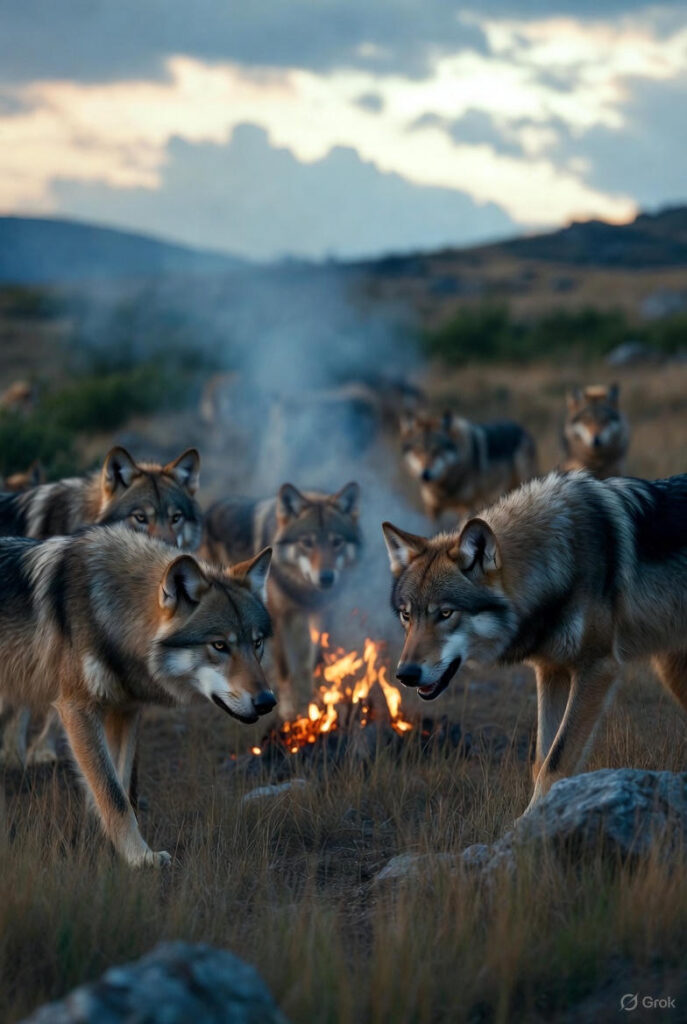
The relationship between German Shepherds and wolves represents an extraordinary journey spanning thousands of years. From wolves warily approaching human campfires to German Shepherds serving as beloved family members and working partners, the transformation has been remarkable. Yet the connection remains visible in physical traits, behavioral patterns, and the special bond German Shepherds form with their human families.
Understanding this wolf heritage helps German Shepherd owners appreciate their dogs more fully. These aren’t just pets—they’re the culmination of an ancient partnership between humans and canines, carrying within them echoes of wild ancestors while being thoroughly adapted to modern life. They deserve respect for both their wild heritage and their domesticated nature, along with the commitment to training, exercise, socialization, and care that allows them to thrive.
Whether watching a German Shepherd patrol their yard with wolf-like vigilance, play with the exuberant joy characteristic of domestic dogs, or work alongside humans in challenging roles, we see the beautiful blend of wild heritage and domesticated companionship. The German Shepherd-wolf connection isn’t about creating wild pets or romanticizing wolf behavior—it’s about understanding, appreciating, and properly caring for remarkable dogs who carry their ancestry with dignity while serving as loyal friends and partners to humans worldwide.
For anyone privileged to share their life with a German Shepherd, recognizing the wolf within enriches the relationship, deepens appreciation for these magnificent animals, and reinforces the commitment to providing the life these descendants of wolves deserve.